
You know the feeling. A campaign ends. Your team is exhausted. You shipped everything on time. The numbers were solid. And then someone on your team says, "How do we do this again?" and you realize you don't have a process; you have a war story. You have a brilliant manager who remembers every decision, every workaround, every last-minute pivot. And the moment she takes another job, the whole thing becomes folklore.
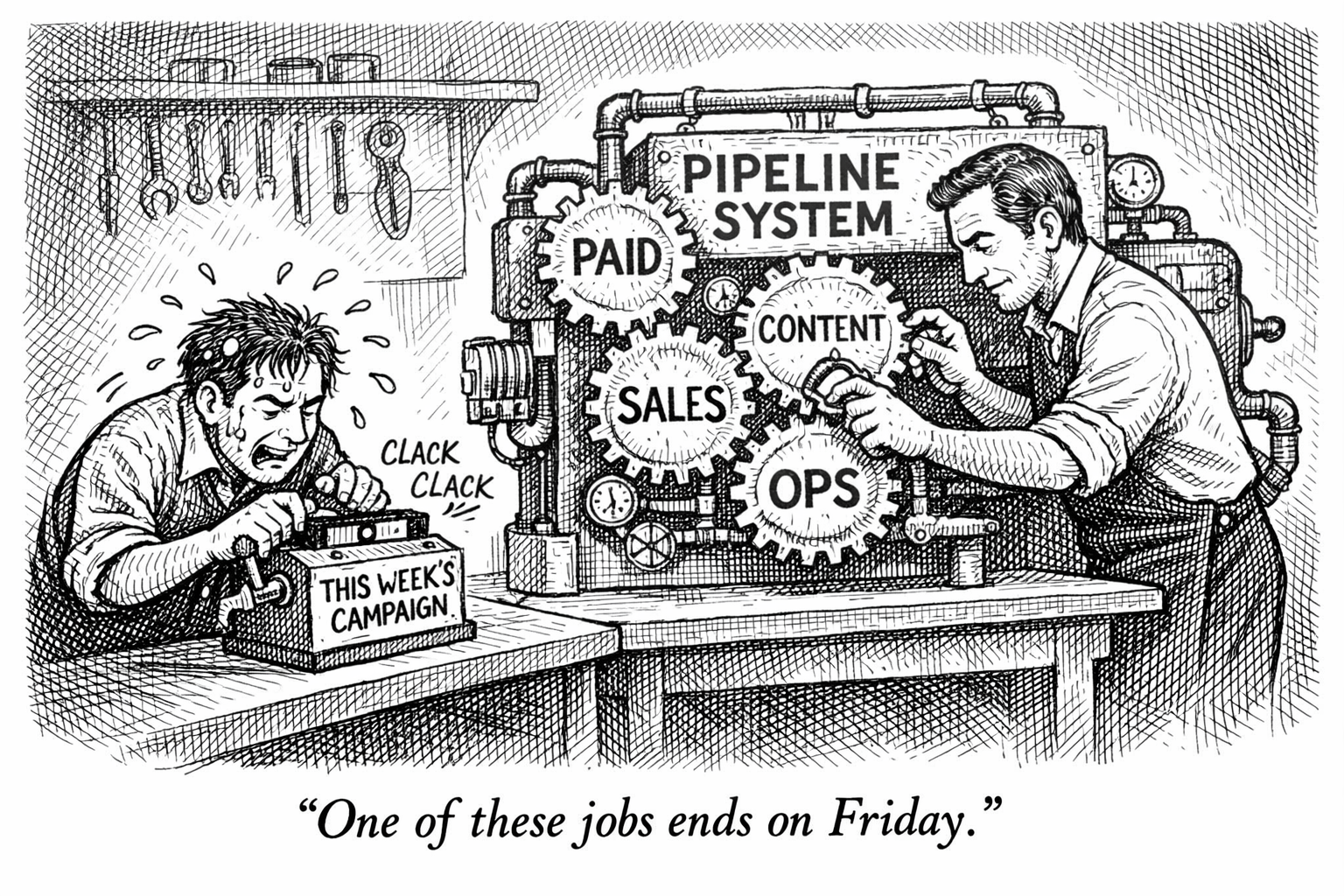
The first sign that your team is campaign-dependent instead of system-driven is this: you can't run the campaign exactly the same way twice without the same person in the room. A system survives personnel changes. A campaign depends on personalities.
Start by documenting the actual process your team runs. Not what you think you should be doing, but what you're actually doing. Talk to your paid media person and write down every decision they make from targeting to creative to spend allocation. Talk to your content person and document what content gets produced, when it ships, and how it gets amplified. Talk to your SDR or your sales operations person and write down exactly what a lead needs to have in it before it's handed off. This documentation doesn't need to be fancy. It needs to be honest and specific enough that someone new to your team could follow it.
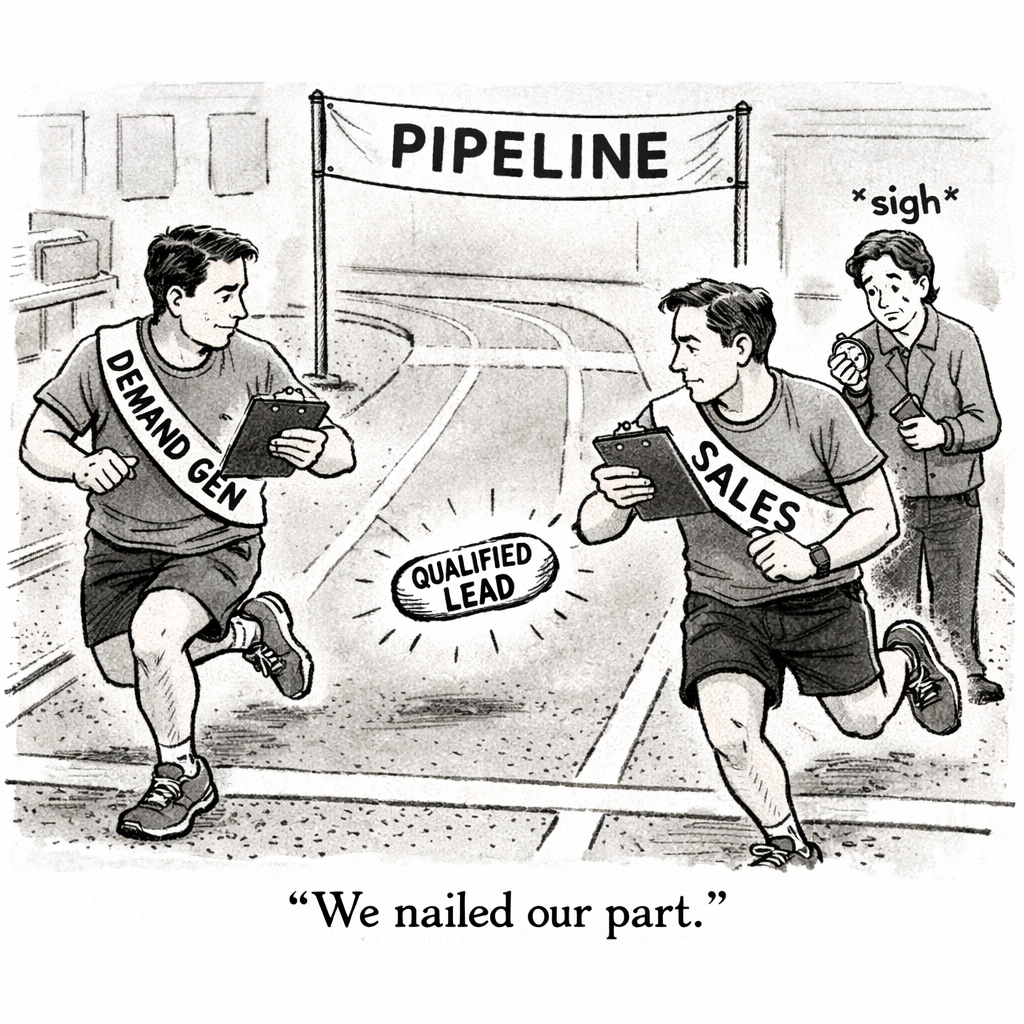
Once you have that, add the handoff points. Where does paid hand off to content? Where does content hand off to sales? Where does sales feed back into paid to say "stop targeting this segment, they never convert"? These handoffs are where most teams have invisible dependencies. Person A doesn't officially own talking to sales, but they always do it in a coffee chat that nobody documented. Build the handoffs into the process, not into the relationship.
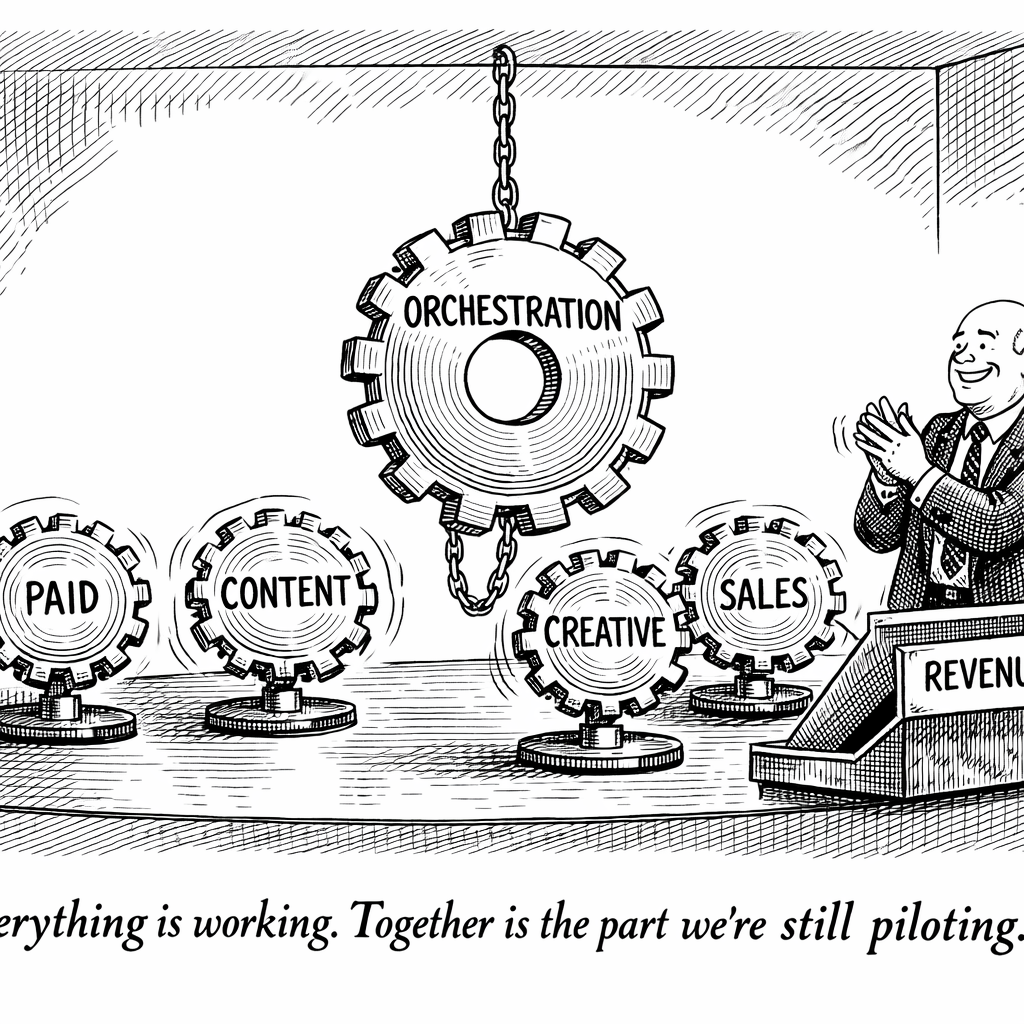
Create shared ownership across paid, field, ABM, and content without losing accountability. Your paid person owns the paid channel. Your content person owns content production. But the orchestration responsibility, making sure those pieces land together instead of stepping on each other, that's owned by the meeting. It's owned by the brief. It's owned by the weekly rhythm where everyone looks at the same data and makes aligned decisions.
The meeting cadence that keeps orchestration from falling apart at quarter's end is three meetings: one weekly stand-up where all functional leaders see the same metrics and talk through blockers; one monthly deeper dive looking at what's working, what's not, and what needs to change; one quarterly reset to revisit strategy. That's it. Consistent. No cancellations. That's the rhythm that keeps the machine running.
The work that requires your direct involvement as a demand gen leader is the orchestration layer: the decisions about what trade-offs are acceptable, the conversations that translate strategy into constraints for every channel. You can't delegate that down. And the moment you try, the system starts to break.
Build the machine now. It pays dividends later.
Scott.