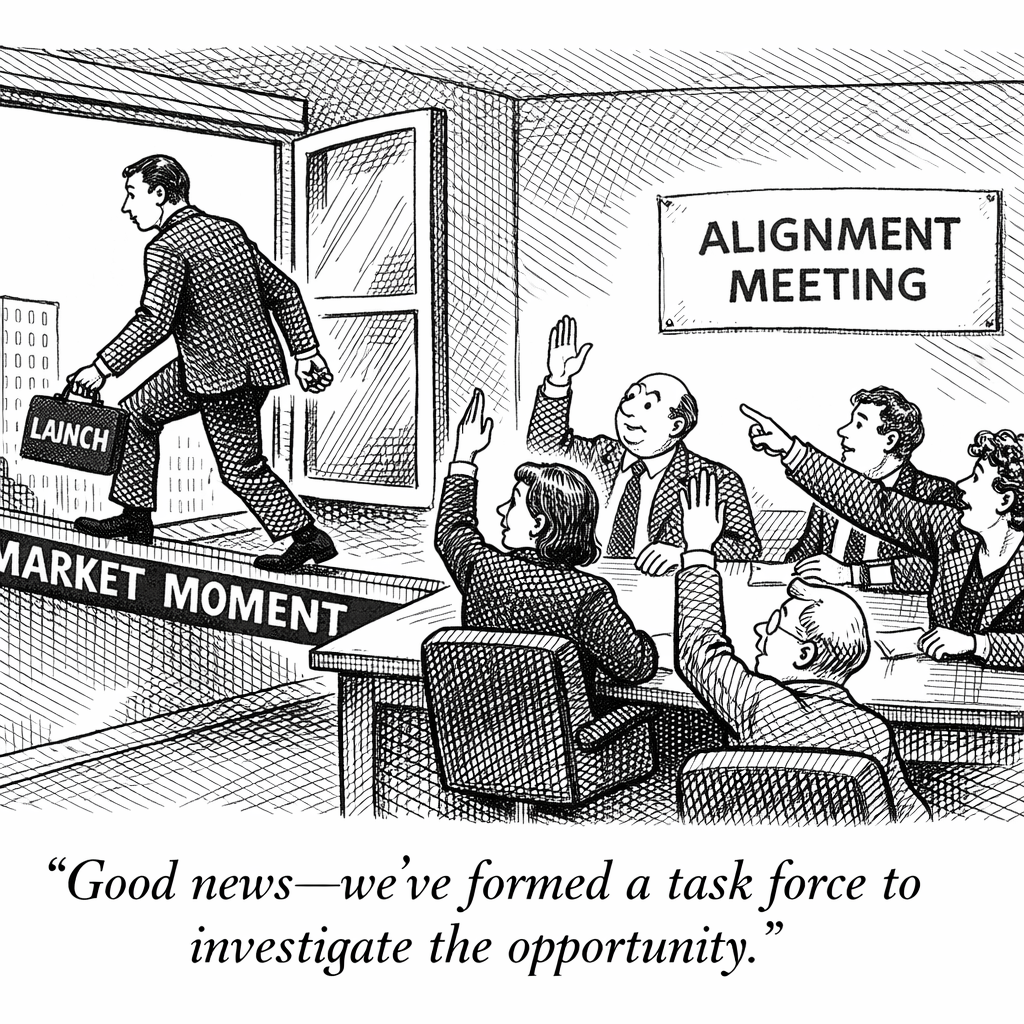

You just finished the campaign brief. It's solid. The message is clear. The audience is defined. The channels are listed. You send it to everyone. You get thumbs-up reactions in Slack. Nobody actually reads it. Three weeks later, paid is running a message that content says they can't support. Sales doesn't understand why the leads they're getting look different than they expected. Content is promoting something that doesn't match the landing page. The campaign implodes. The brief was fine. It was just decorative.
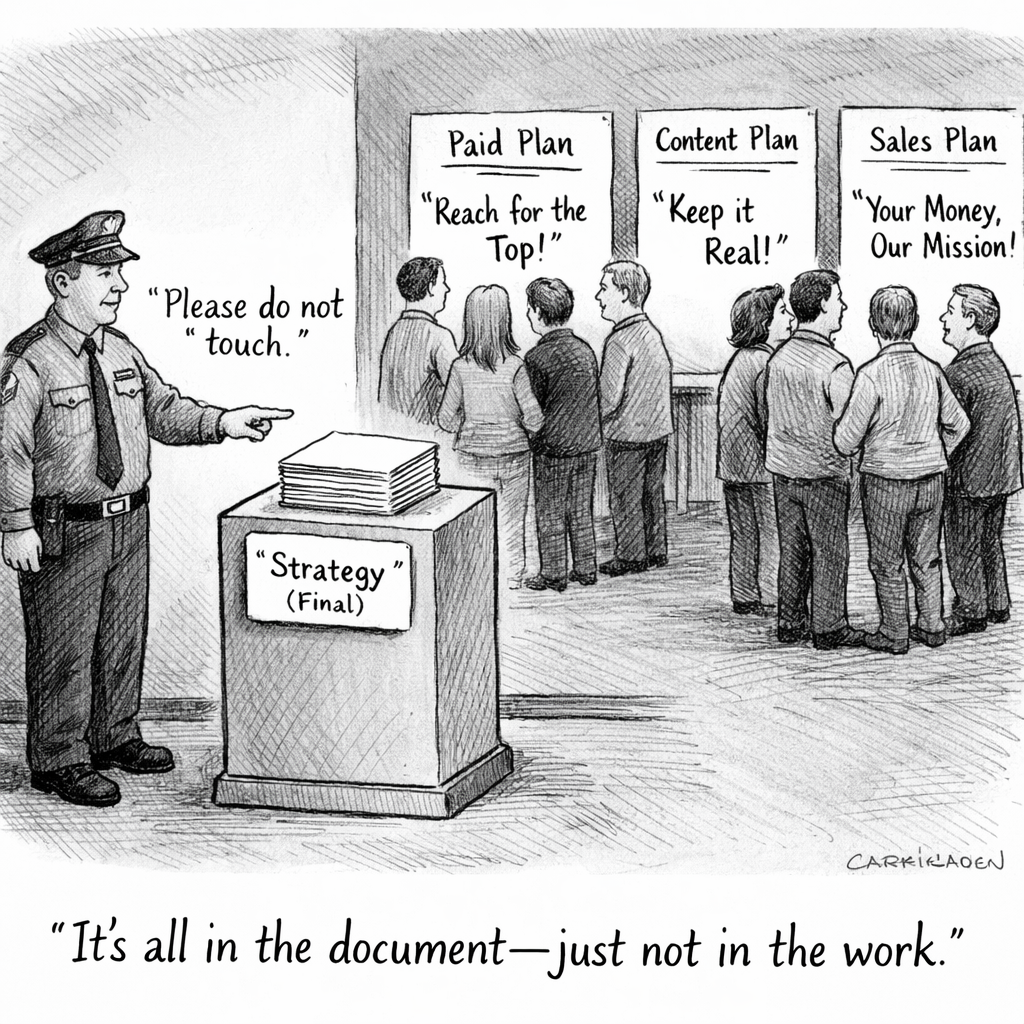
The most common campaign brief mistake that causes channel misalignment three weeks in is this: the brief doesn't actually constrain behavior. It's too vague. It's too long. It's in a format nobody reads. Or it doesn't answer the question that's actually keeping people up at night. Your paid person doesn't care about your strategic rationale. They care about the targeting, the creative direction, the budget, and what success looks like. Your sales team doesn't care about your positioning statement. They care about what to say when someone picks up the phone, what kind of prospect they should expect, and when to follow up. Write for what people actually need to know, not what sounds good in a presentation.
What a brief needs to say about ownership, timing, and messaging to be useful is actually pretty specific:
- The one-sentence message: not the tagline, the core claim;
- The targeting: who are we talking to and why do they care;
- The channels and the timing: what's happening when, and in what order;
- The ownership: who is responsible for paid, content, the sales handoff, and making these pieces work together;
- Success: what are we measuring, and what counts as working;
That's the brief. Fit it on two pages. If you can't, you don't understand your campaign well enough to run it.
Pressure-test the brief before launch. Read it out loud to the people who are going to execute it. Watch their faces. If you see confusion, stop and ask. Ask your paid person: "Is there anything here that would make this targeting impossible?" Ask content: "Can you support this message?" Ask sales: "Would you want to open a conversation with this kind of prospect?" Don't ask these questions in writing. Ask them in a meeting where you can see the hesitation. Because someone will hesitate, and that hesitation is data.
What happens when sales, paid, and content are working off different versions of the strategy is catastrophic and completely avoidable. Paid is spending money to reach an audience. Content is creating messaging that doesn't match what paid is saying. Sales is calling people who don't fit the profile that paid was targeting. Everyone is executing their part well, but the system is broken because nobody's reading from the same sheet.
The one question to answer at kick-off that prevents the most common integrated campaign failure is this: "If this campaign succeeds, what is different for the prospect six weeks from now?" Not for you. For the prospect. What have they learned? Who have they talked to? What decision are they closer to making? Once you can answer that question, work backward. That backward map is your campaign. Everything else is support.
The brief is not a document. It's a covenant. Write it like people are going to read it. Because if they don't, everything that follows is just luck.
Scott.