
The format is not complicated. A thought leadership ad on LinkedIn is just an organic post, from a real person at your company, that you put paid budget behind. No separate creative. No different copy. You take something that a person actually wrote, boost it to a targeted audience, and it runs in the feed looking exactly like organic content, because it is.
Devon Shaw, VP of Marketing at LinkedIn, shared the performance data: thought leadership ads run at 2.2x higher click-through rates compared to single image ads with the same objective. The reason is not magic. It is because they look like content instead of advertising, and people engage with content.
Most B2B demand gen teams are underusing this format for a few avoidable reasons.
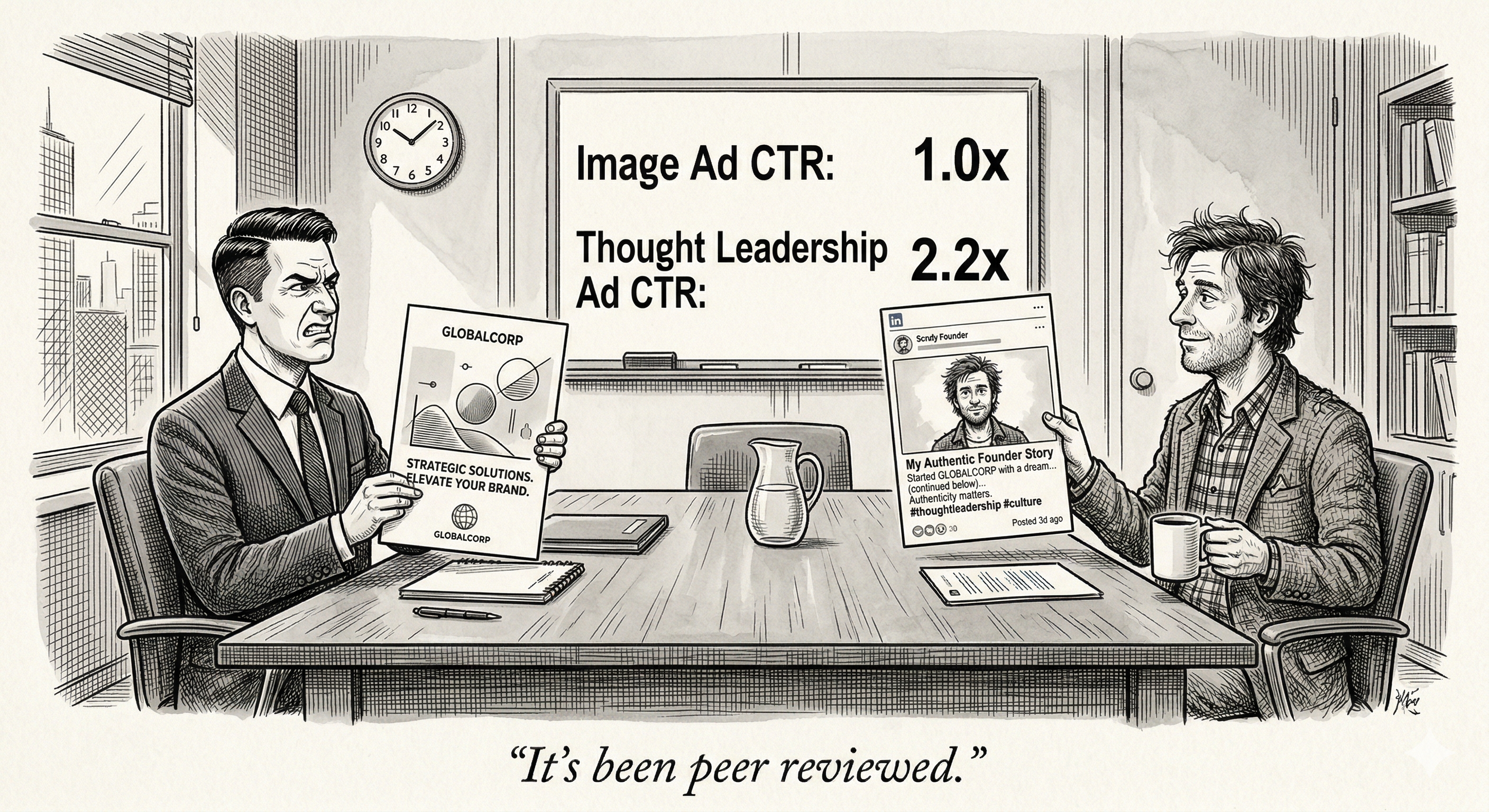
The first is that they try to produce the thought leadership content the same way they produce ad creative. Assigned topics, reviewed by legal, scheduled six weeks in advance, all the personality drained out by the approval process. That is not thought leadership. That is just a blog post with someone's headshot on it.
The second is that they try to run it cold, with no organic testing first. The best thought leadership ads start as organic posts that already proved they resonated. Take a post that generated real ICP engagement organically and run it as a paid unit. The social proof travels with it.
The third is not knowing what to measure. The relevant metrics for thought leadership ads are different from direct response ads. You are measuring engagement rate, video completion rate, ICP match in the audience engaging, and downstream pipeline influence, not just clicks to a landing page.
Here is a workflow worth trying: identify two or three people at your company who are willing to post on LinkedIn consistently; have them post twice a week, at minimum, on topics your ICP cares about; track which posts generate engagement from people who match your ICP by title and company size; take the top performers and run them as sponsored content to a targeted audience; measure company intelligence data to see which accounts are engaging beyond just the people who clicked.
Shaw's data shows that posting at least twice a week drives a 5x increase in profile views for the poster. That is organic reach compounding. Paid amplification then extends what the algorithm has already validated.
The format is not new. But most demand gen teams are still treating it as an experiment rather than a core channel. The performance data suggests it should be the other way around.