


You just shipped a campaign that worked. Lead quality was good. Conversion rates were solid. Sales is happy. So you write down everything you did, send it to your team, and schedule a debrief for next week. And then life happens. The next campaign is different. New creative brief. New targeting. New timeline. And somewhere around week three, you realize the first campaign's playbook isn't applicable anymore. So you improvise. You make it work. But you also forget half of what you actually did the first time. That's not iteration. That's amnesia.
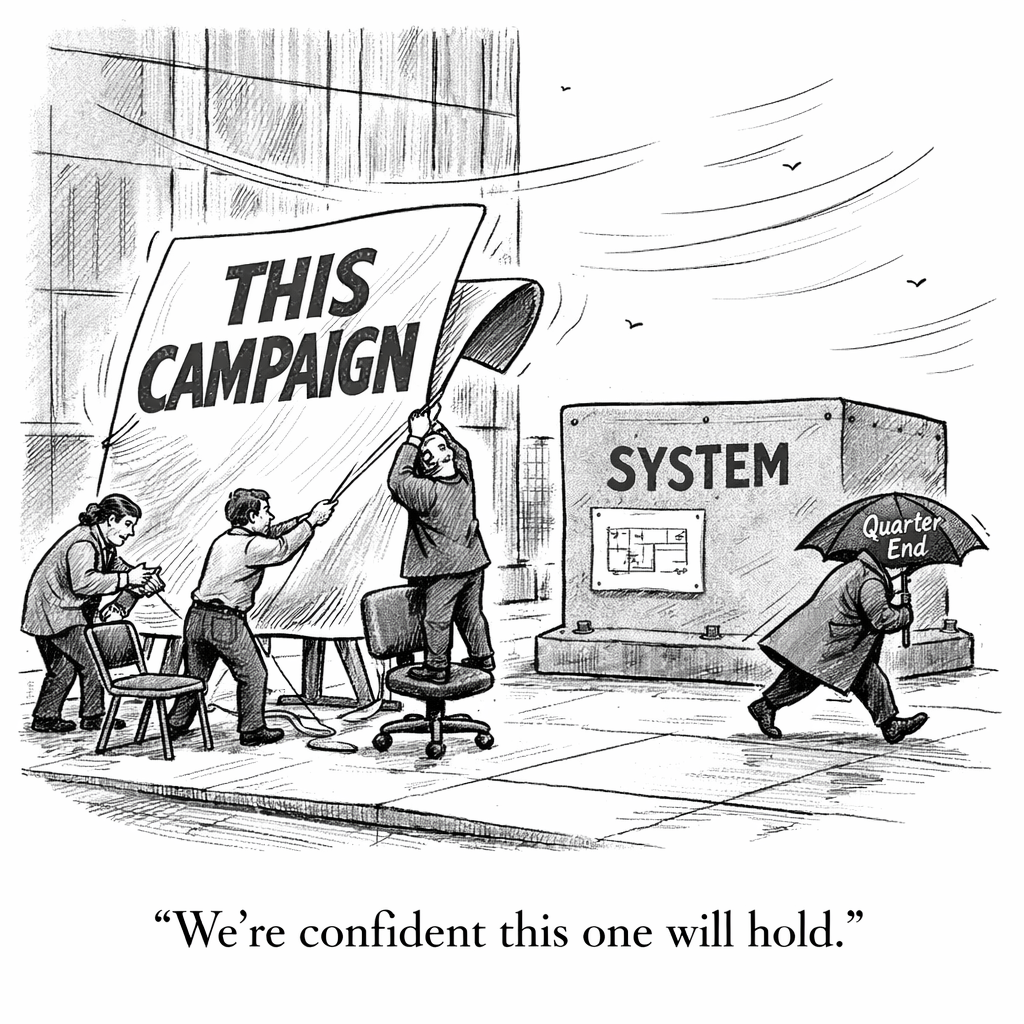
The difference between a campaign that worked once and a campaign you can run again is process documentation. Not hope. Not intuition. Not "we'll remember how we did it." Documented process. The underlying mechanics, how you think about targeting, how you set up the audience segments, how you coordinate between channels, how you brief sales, how you interpret data, those should be consistent. That consistency is what separates a lucky campaign from a system.
Document the campaign process so your team can execute it without you. This doesn't mean writing a novel. It means answering specific questions:
- What data do we need before we start;
- What are the five decisions we make before launch;
- What does a kick-off meeting look like;
- What metrics are we looking at and when;
- What's the trigger for making changes;
Start with the mechanics that are hardest to remember or most likely to get cut when you're busy. Those are usually the ones that matter most.
The handoff checklist that keeps integrated campaigns from falling apart mid-flight is actually just a series of yes-or-no questions. Does the sales team understand what targeting we're running? Do they know what the creative says and how to reference it in a conversation? Does content know what paid is saying so they're not contradicting it? Does everyone know the weekly cadence for checking metrics? If you can't answer yes to all of those before launch, your campaign is already broken. You just don't know it yet.
One simple source of truth looks like a shared campaign brief. Not five different documents living in five places. One document that everyone reads, everyone knows where to find, and everyone updates when things change. It includes the message, the targeting, the channels, the timeline, the owner of each piece, and the weekly metrics you're checking. It's boring. It's useful. It's the thing that prevents the "I didn't realize you were planning to do that" conversations at week four.
How to run a campaign debrief that actually improves the next one: start with what you learned, not what you accomplished. Ask your team: what would we do differently? What surprised us? What assumptions were wrong? Write down the actual changes you're going to make next time. Then actually make them next time. Most campaigns get debriefed and forgotten. The repeatable ones get debriefed and changed.
Systems beat luck every time.
Scott.