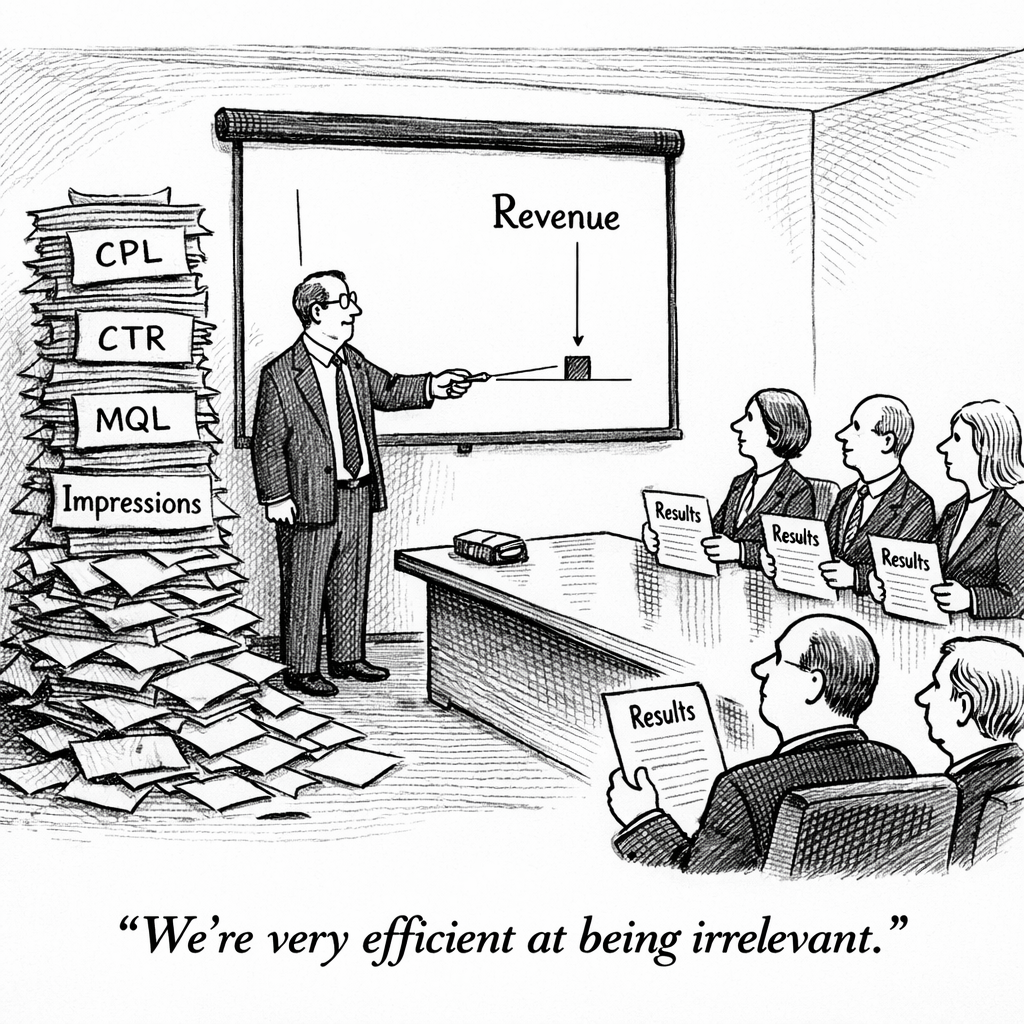
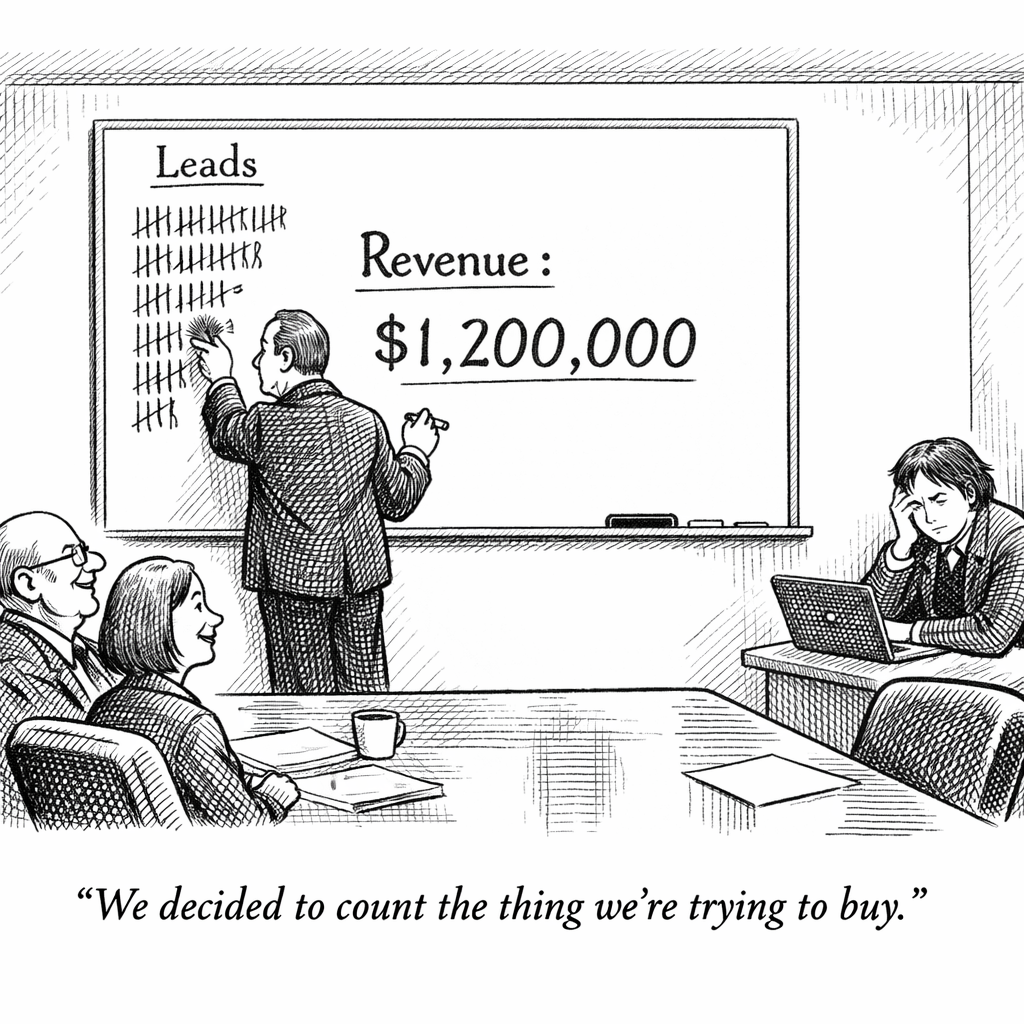

You set an MQL target at the beginning of the year. You hit it. Sales didn't convert those leads into pipeline. Now you're defending a number that you achieved, but that didn't matter. The downstream consequences of celebrating lead volume ripple through your entire organization, and they're worse than you think.
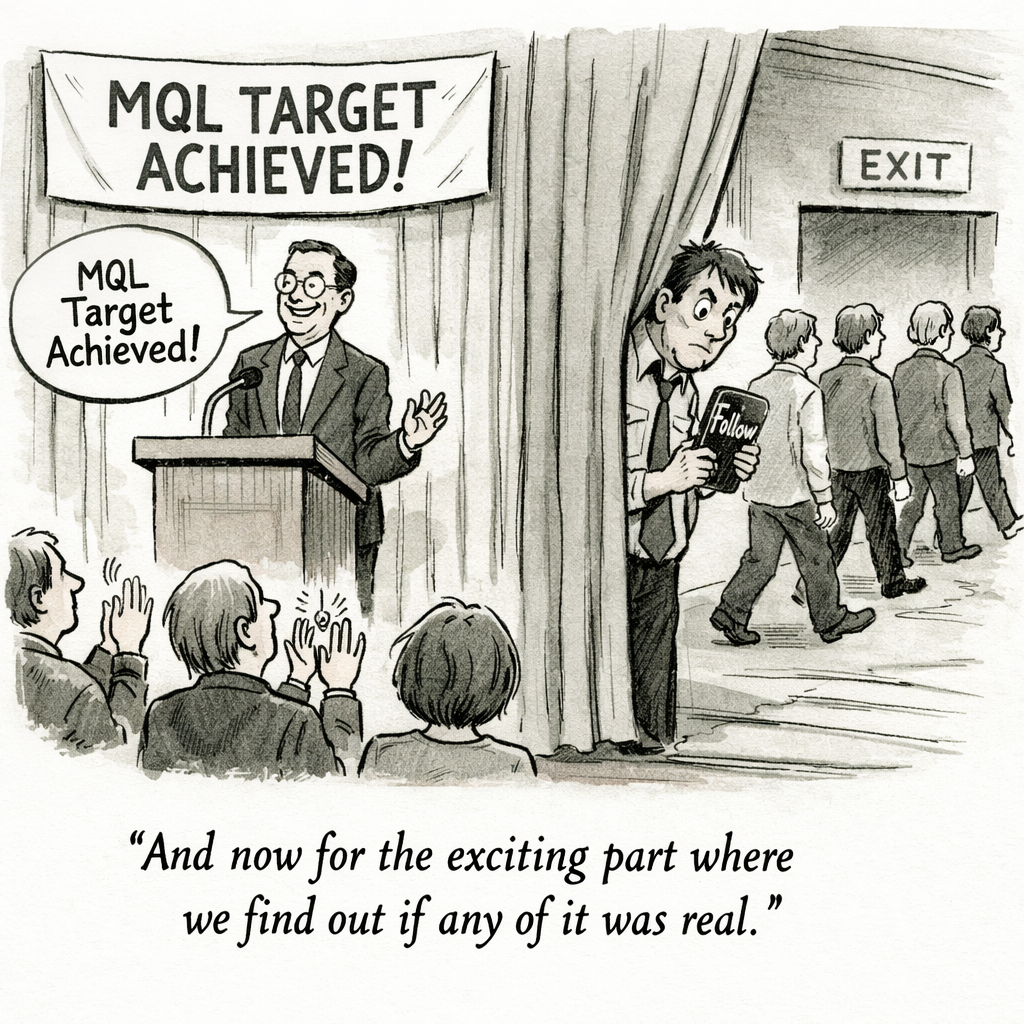
For your team, it means they're rewarded for activity, not outcomes. Your SDRs are measured on call volume, not calls that lead to pipeline. Your marketers are measured on lead generation, not lead quality. Your campaigns are judged on click-through rate, not on whether those clicks turn into accounts that move. Over time, this incentive structure corrupts the entire organization. Your best people leave because they know the game is rigged.
For your budget, it means you're fighting for resources every quarter based on a number that doesn't correlate to revenue. Your CRO sees that your MQL target went up but pipeline didn't move. So next year, your budget gets cut. You're defending a number that nobody in the C-suite actually cares about.
What pipeline velocity actually measures and why it belongs on your weekly report is the antidote. Pipeline velocity is the speed at which accounts move from one stage to the next. It's the only metric that tells you whether the leads you generated are actually progressing toward close. If your leads are sitting in deal stage for six months, they're not pipeline. They're a promise you made that didn't convert.
Three metrics that prove demand gen's contribution without a 30-slide deck:
- Pipeline influenced by marketing source and motion;
- Pipeline velocity for accounts touched by demand gen versus accounts sourced by sales;
- Win rate for accounts influenced by demand gen versus other sources;
Those three numbers tell the entire story. Marketing is either accelerating deals, or it's not.
How to retrain your team to care about quality without crushing their confidence requires messaging and patience. Start by showing them the pipeline velocity data. Show them which campaigns produce leads that move fast, and which ones produce leads that stall. Don't blame them for the bad ones. Celebrate the good ones and ask what's different. Over time, they'll start optimizing for velocity instead of volume naturally.
What happens when a bad quarter becomes a data conversation instead of a blame game is that your team actually improves. Instead of making excuses for low MQL volume, you're analyzing which segments are progressing and which ones are stalled. The whole organization gets better because you're talking about the actual business problem.
Make the switch this quarter. Stop celebrating leads. Start celebrating velocity.
Scott.