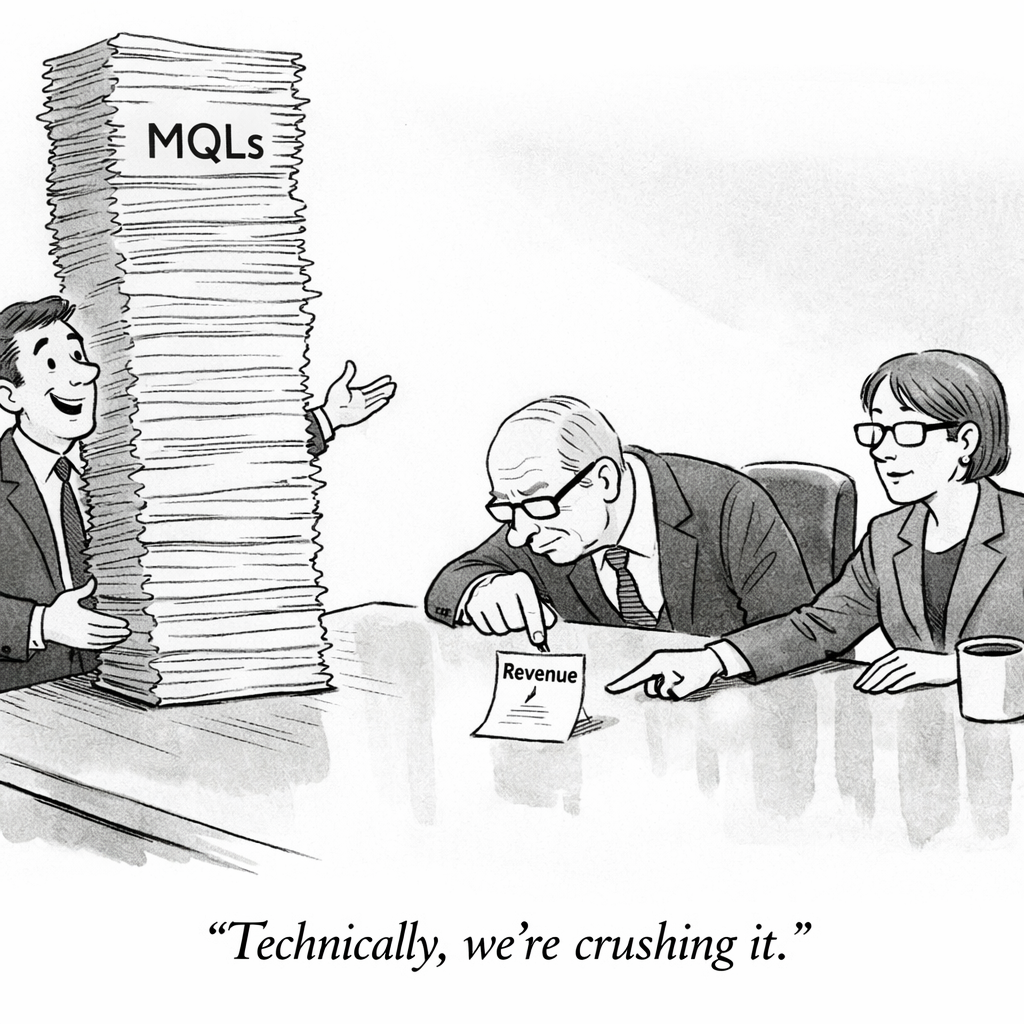
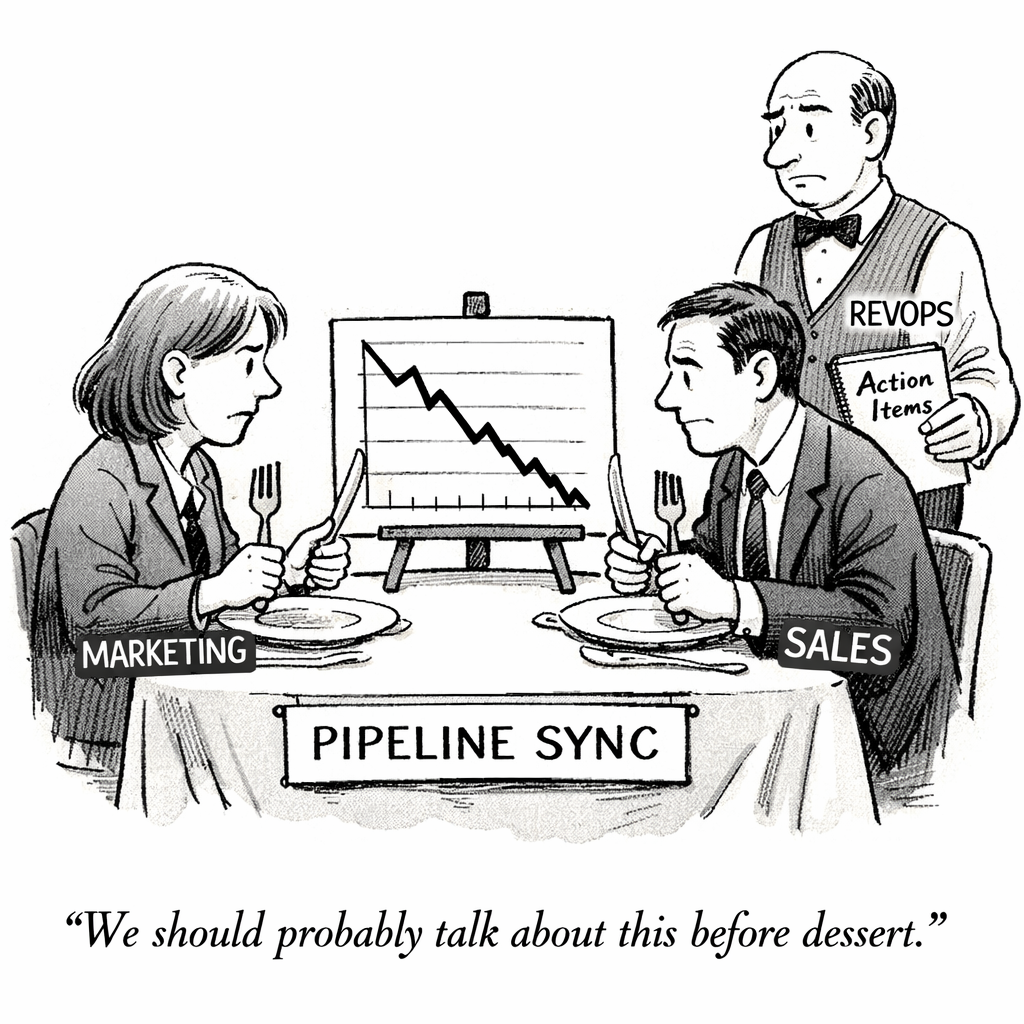

Boards fund outcomes, not activity, and most marketing decks show a lot of activity. You've probably spent months perfecting your cost per lead calculation, your lead source attribution, your campaign efficiency metrics. Your board spent thirty seconds looking at them and thinking about pipeline instead.
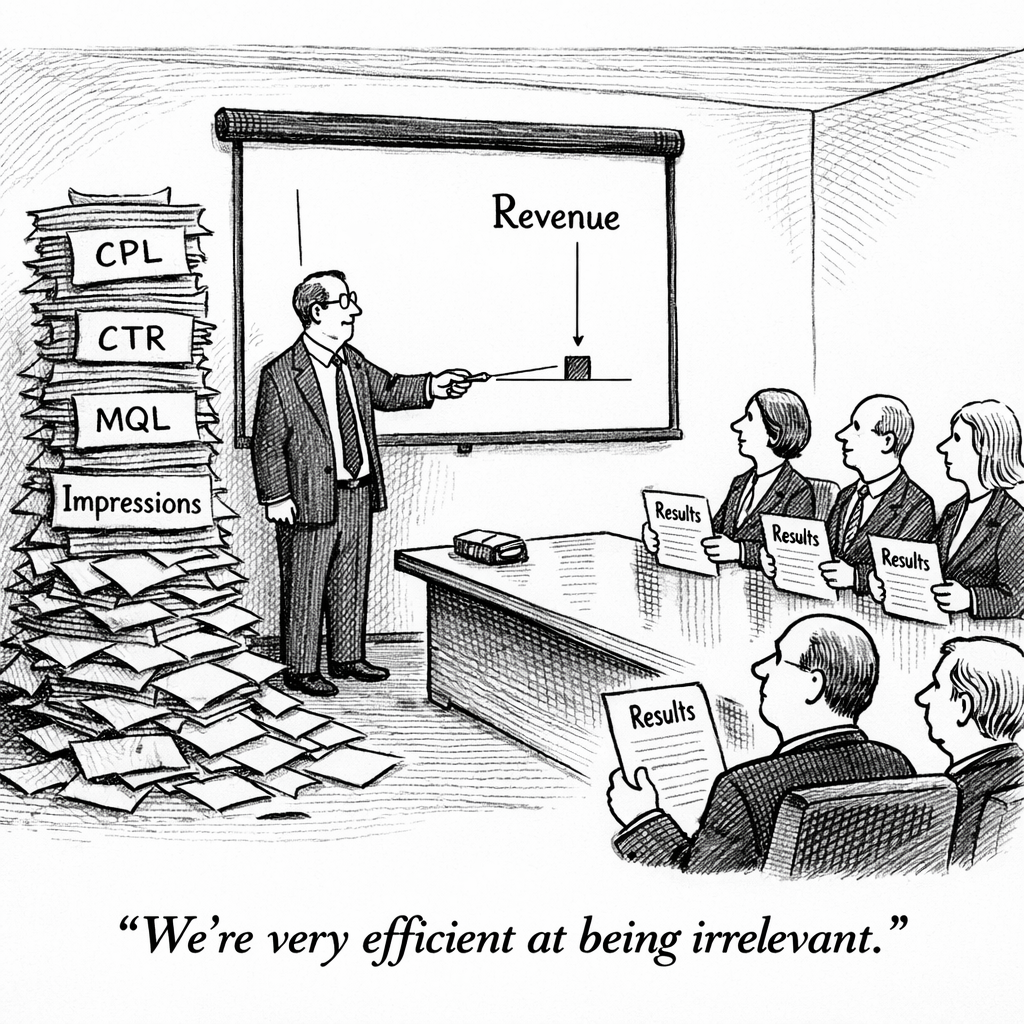
The problem isn't your metrics. It's that you're reporting the wrong ones. Cost per lead, lead velocity, even cost per pipeline dollar, these are all inputs. They're not outcomes. Your board cares about three things: revenue, growth, and whether marketing is a constraint or an accelerant. If your deck doesn't answer those questions, everything else is noise.
The three revenue metrics that actually get CMOs more budget are pipeline contribution, win rate influence, and closed revenue attribution. Notice what's missing? Activity. Lead volume. Cost per acquisition in the early funnel. Those are internal metrics for your team. Your board needs proof that marketing is moving deals closer to close.
Here's where most CMOs get stuck: restructuring the marketing narrative around closed-won without losing your team. Your demand gen leaders are measured on MQLs today. Your product marketers are focused on sales enablement. Your content team is tracking engagement. If you overnight say "we only care about closed revenue," you'll get pushback, confusion, and probably a few resignations.
The solution is backward integration, not top-down mandate. Start measuring pipeline in parallel with your current metrics. Show your team how their MQL work connects to pipeline. Build dashboard visibility into what's actually closing. When your team sees the connection between their work and revenue, the shift happens naturally. Dots Oyebolu, who's run marketing for multiple growth-stage companies, says it plainly: "Closed-won revenue will be the most important KPI, not pipeline. I would rather report closed ones than pipeline." The sooner you move in that direction, the sooner your team stops defending activity and starts driving outcomes.
What happens to CMO tenure when the pipeline conversation is avoided? You find out in a board meeting when the CEO asks why marketing isn't contributing. And then it's too late to build the relationship that matters most.
The CFO relationship that most CMOs get wrong is treating it as transactional. They show up with a deck asking for more budget. Real CMOs build ongoing dialogue with their CFO about pipeline economics. They understand the unit economics of a closed deal. They know the average deal size, the sales cycle, the win rate. They speak that language. And when they ask for budget, they frame it in terms of incremental closed revenue, not lead volume.
Start with one conversation with your CFO. Ask them what closed-won looks like for your category, and what the path from pipeline to revenue actually is. Then rebuild your board narrative around those numbers instead of the ones you've been comfortable with.
Your board will notice the difference immediately.
Scott.