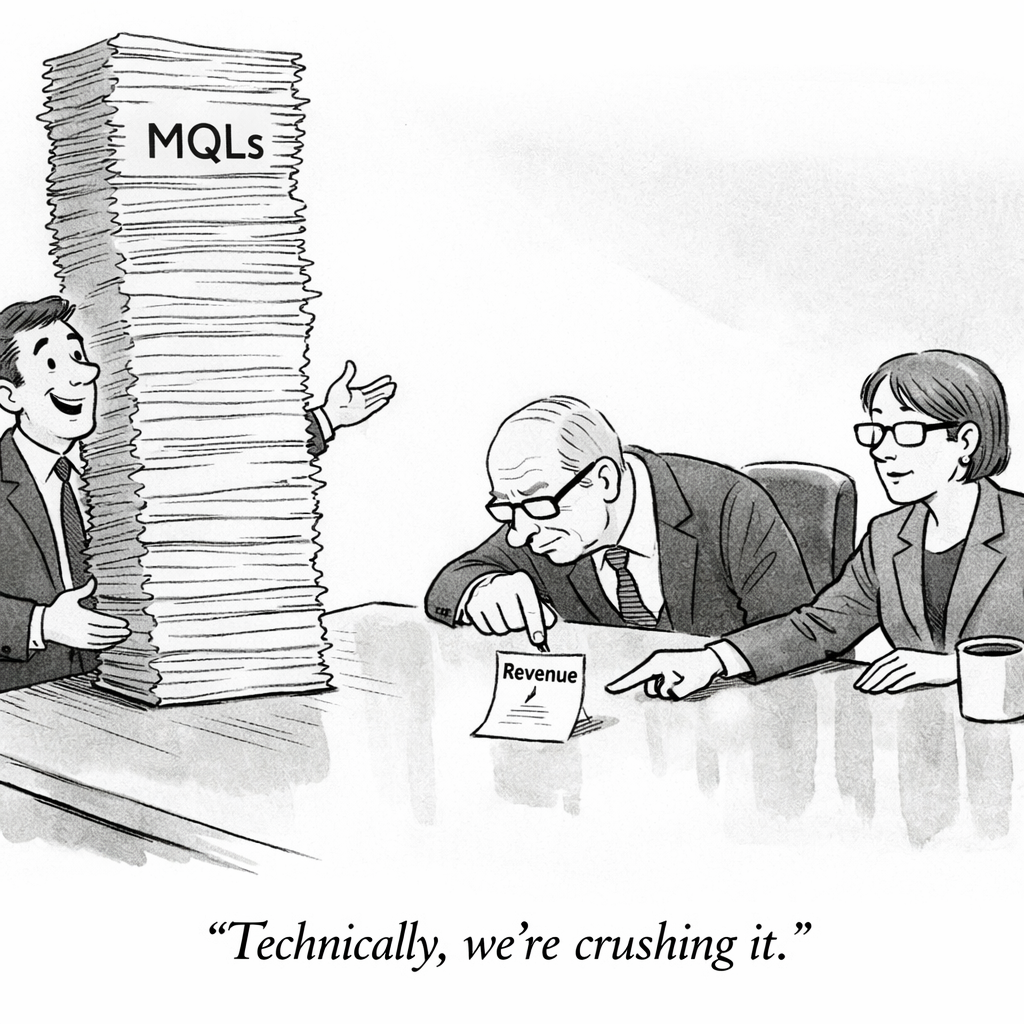

The most common reason demand gen and sales don't trust each other's numbers is that they're measuring different things. You're reporting leads created. Sales is reporting pipeline influenced. You're measuring activity. They're measuring outcomes. You're speaking two different languages, and neither side trusts the other because the data never connects.
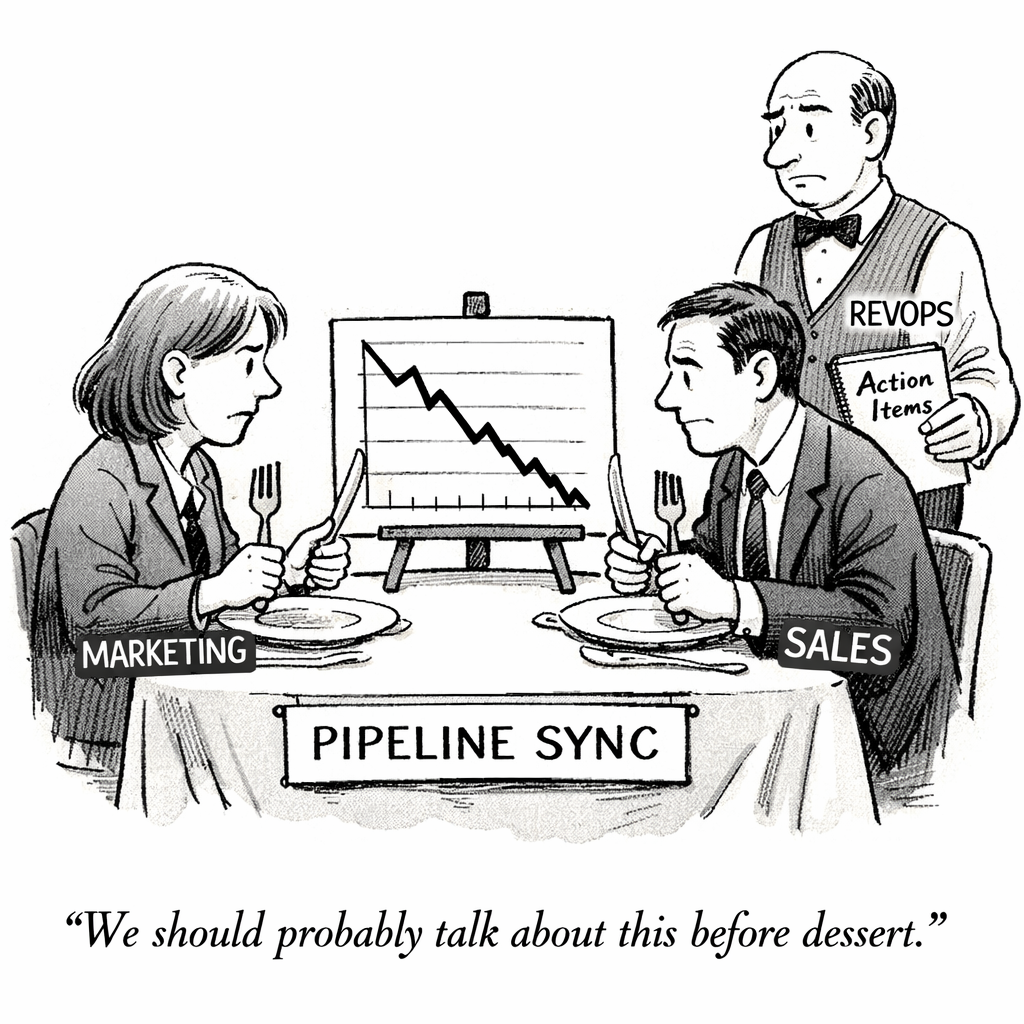
This disconnect costs you real money. It costs you credibility with your CRO. And it puts your team in a defensive position every single quarter when the pipeline conversation happens.
Sherry Prescott-Willis scaled ABM from $250K to $20M in quarterly pipeline by doing something radical: she stopped reporting leads and started reporting pipeline movement with sales. Not pipeline created. Movement. How many accounts in your target universe moved from awareness to consideration? From consideration to deal stage? She built monthly pipeline syncs with sales from day one, not as a reporting exercise, but as a strategic operation meeting. What's moving? What's stuck? Why? What do we do about it this week?
This is the model. The most common mistake demand gen leaders make is structuring these syncs as status updates. Sales doesn't care about your new email template or your latest paid campaign. Sales cares about accounts moving through their funnel. Structure your monthly pipeline sync like this:
- Pipeline created by motion and source;
- Pipeline progression by age;
- Accounts we expected to move but didn't;
- Accounts that surprised us by moving faster;
- What we're changing next month based on what we learned;
That's it. Forty-five minutes. Data only. Insights only.
How to build backup plans into the quarter before the quarter starts separates VPs who survive bad quarters from ones who get reorganized. When you're in your monthly sync and you see that one motion is underperforming, you need a backup motion already scoped. You need accounts to move into already identified. You need messaging frameworks already built. You don't have time to build this when the number is already soft. Build it in month one when you still have runway.
What happens when you stop reporting leads and start reporting pipeline is that your relationship with sales changes immediately. They start seeing you as a peer in the revenue equation, not a service function. They stop blaming you for bad leads because you're jointly accountable for what's in the pipeline. They start collaborating on account selection because they know that pipeline sourcing is a shared decision.
Start with your sales leader this week. Ask them what pipeline movement looks like for each segment. Then build your reporting around that instead of what you've been comfortable with.
Scott.