
Stop measuring campaigns. Start measuring the engine.
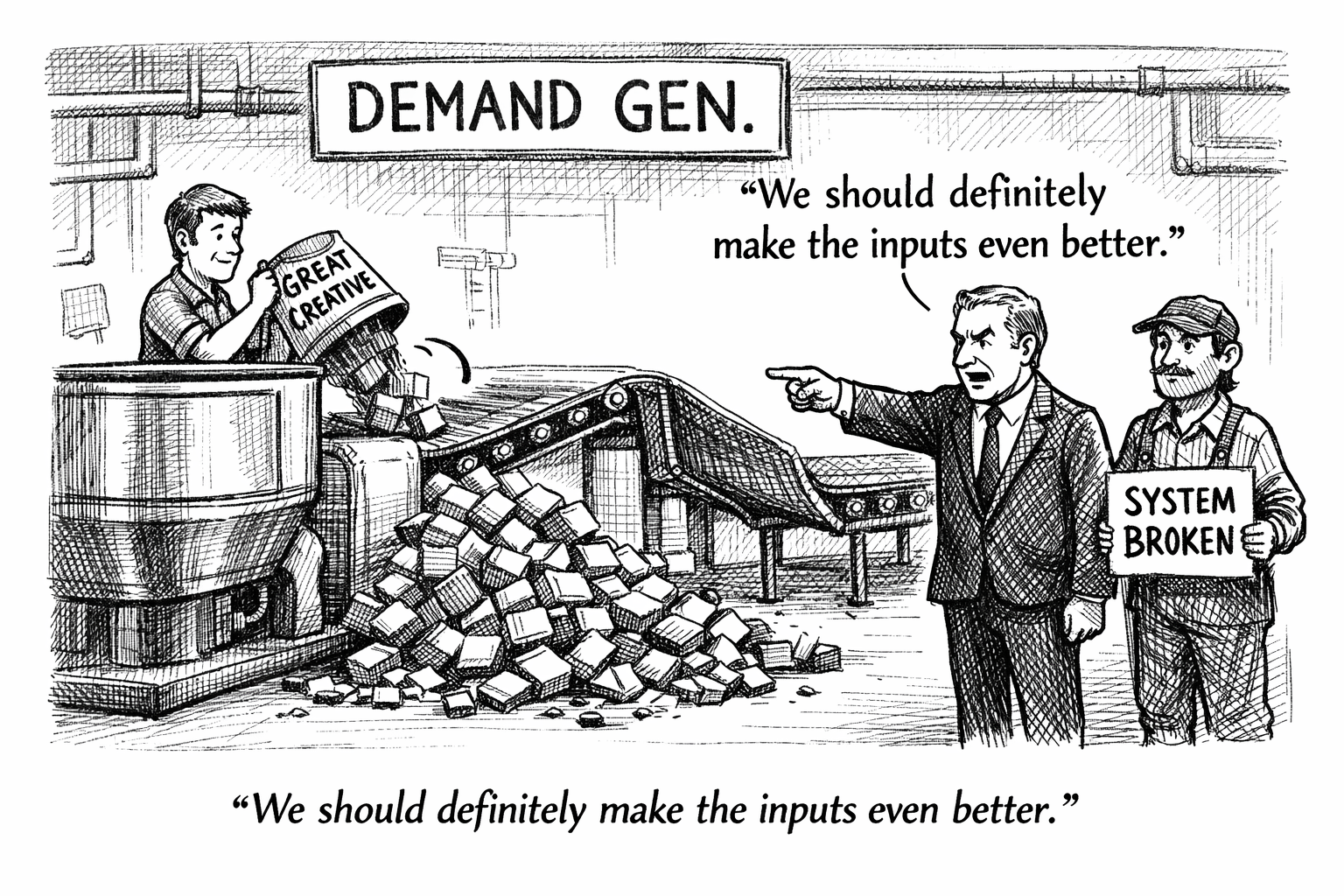
You probably didn't realize you were doing this, but somewhere along the way your organization started treating demand generation like a series of disconnected pushes instead of a continuous system. One quarter you run a webinar campaign. Next quarter it's a cold email and ABM combo. The quarter after that you're back to a big content play. Each one was well-intentioned, reasonably funded, and delivered some results. But none of them produced pipeline at the same rate. None of them ever got repeated exactly the same way.
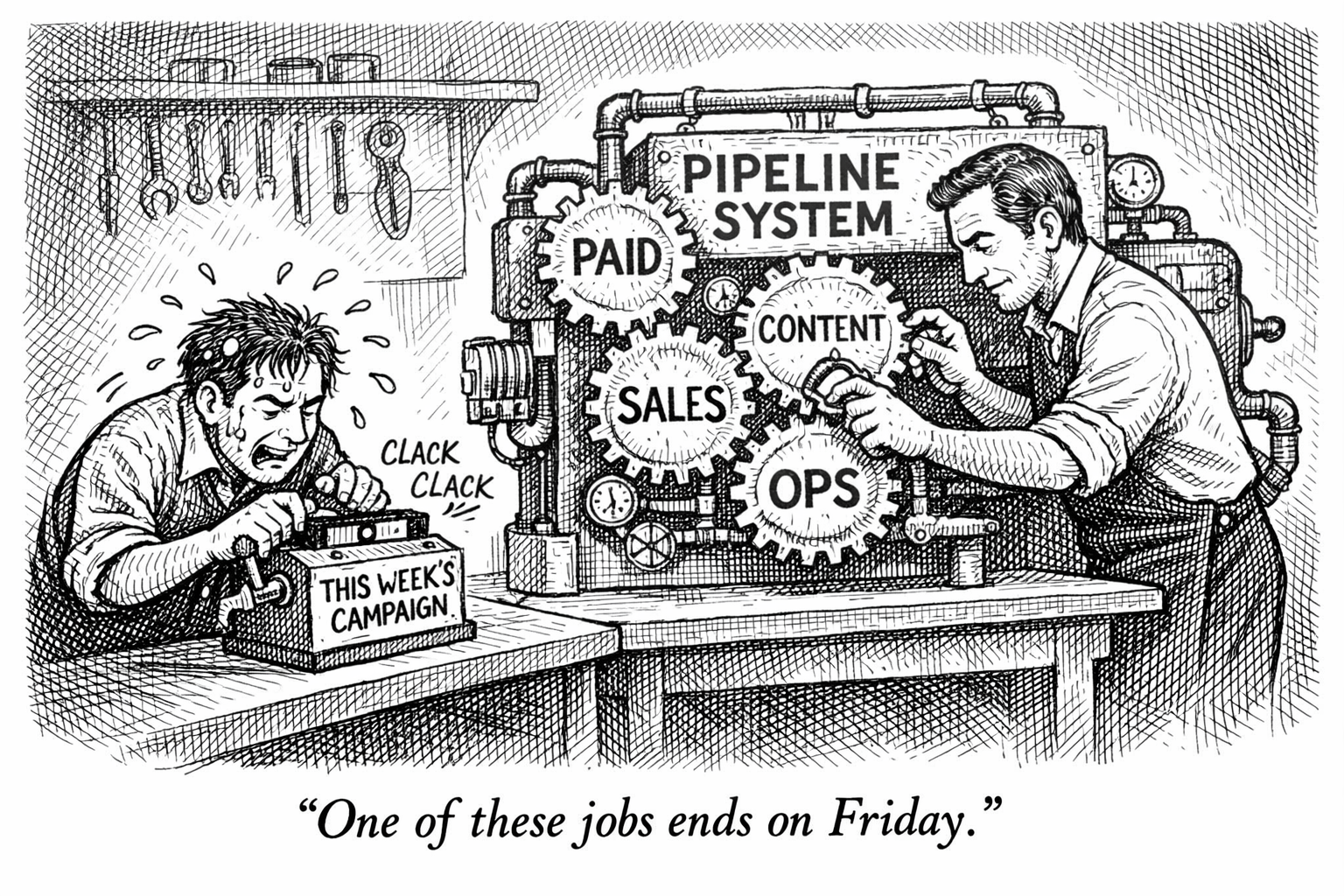
The difference between a campaign and a demand gen engine is the difference between a sprint and a sport. A campaign is a tactic with a timeline. An engine is a system with inputs, a process, feedback loops, and a measurable output. Campaigns are fragile. Engines scale. Campaigns depend on personalities. Engines depend on process.
Korstiaan Hardman from SAP built something called the STEAM framework when he restructured his demand function: Scope, Targeting, Engagement, Activation, Measurement. He wasn't naming steps in a campaign. He was defining the five layers of a pipeline engine that could orchestrate across product lines, sources of demand, and teams. And critically, he created a demand manager role whose job was to act as custodian of that pipeline across the entire organization. Not owner of campaigns. Custodian of the engine.
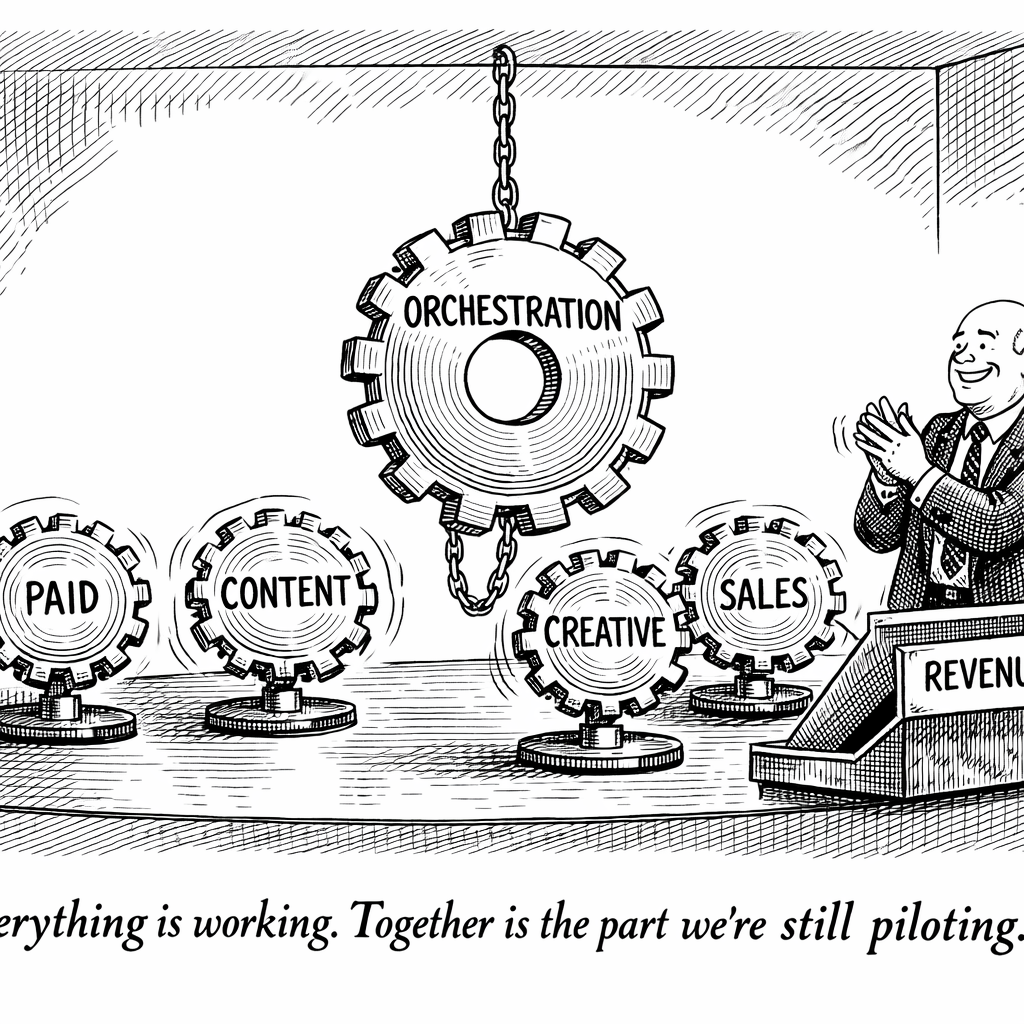
Start with an audit. Look at your current stack. Where are the gaps in orchestration, not the gaps in tools? Can your paid team see what your sales team is doing with the same prospects? Can content iterate on content that actually moves needle without waiting four months for the next all-hands? Can sales trigger demand gen interventions, or do they just hope demand gen guesses right? Those gaps are the ones that matter. Spend two hours with your ops person mapping where the broken handoffs are.
A well-orchestrated demand gen function looks a certain way from the outside. You see consistent pipeline, quarter to quarter. You see sales actually using the leads they receive instead of ignoring them for two weeks. You see content production that aligns with what's actually converting. You see lead quality trending up, not cycling between good and terrible based on which team got the budget that quarter. That's not better execution. That's better orchestration.
The budget conversation gets easier once you stop asking your CFO to fund campaigns and start asking them to fund infrastructure. "We need $150K to run a webinar" is a variable cost conversation. "We need $150K to build the system that will consistently generate $2M in pipeline" is an infrastructure conversation. One is an expense. The other is an engine.
Your next campaign won't save you. Your system will.
Scott.