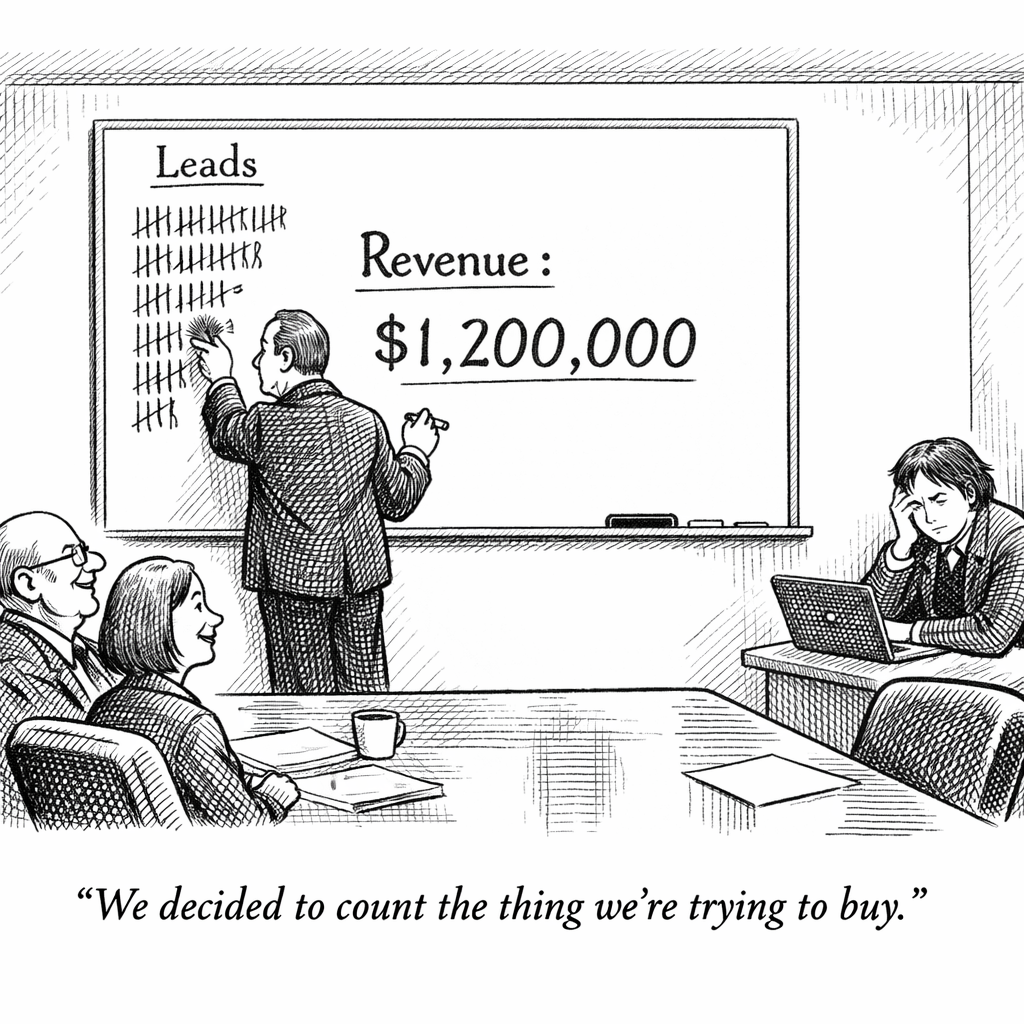
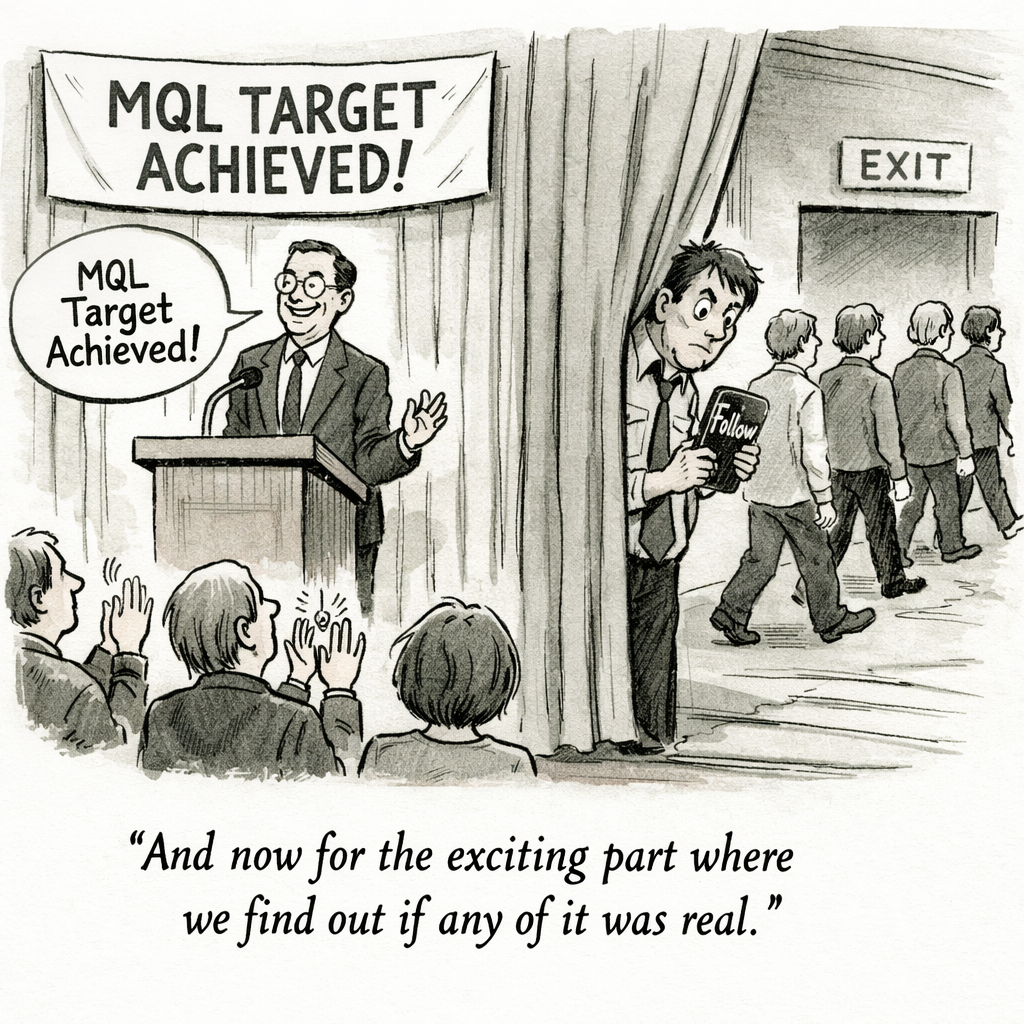

You hit your MQL target, and nobody celebrated. Because nobody in the building cares about your MQL target except the person who gave it to you. Your VP cares about pipeline. Your CRO cares about pipeline. Your CEO cares about closed revenue. You're being judged on a metric that matters to approximately zero people who make decisions about your career.
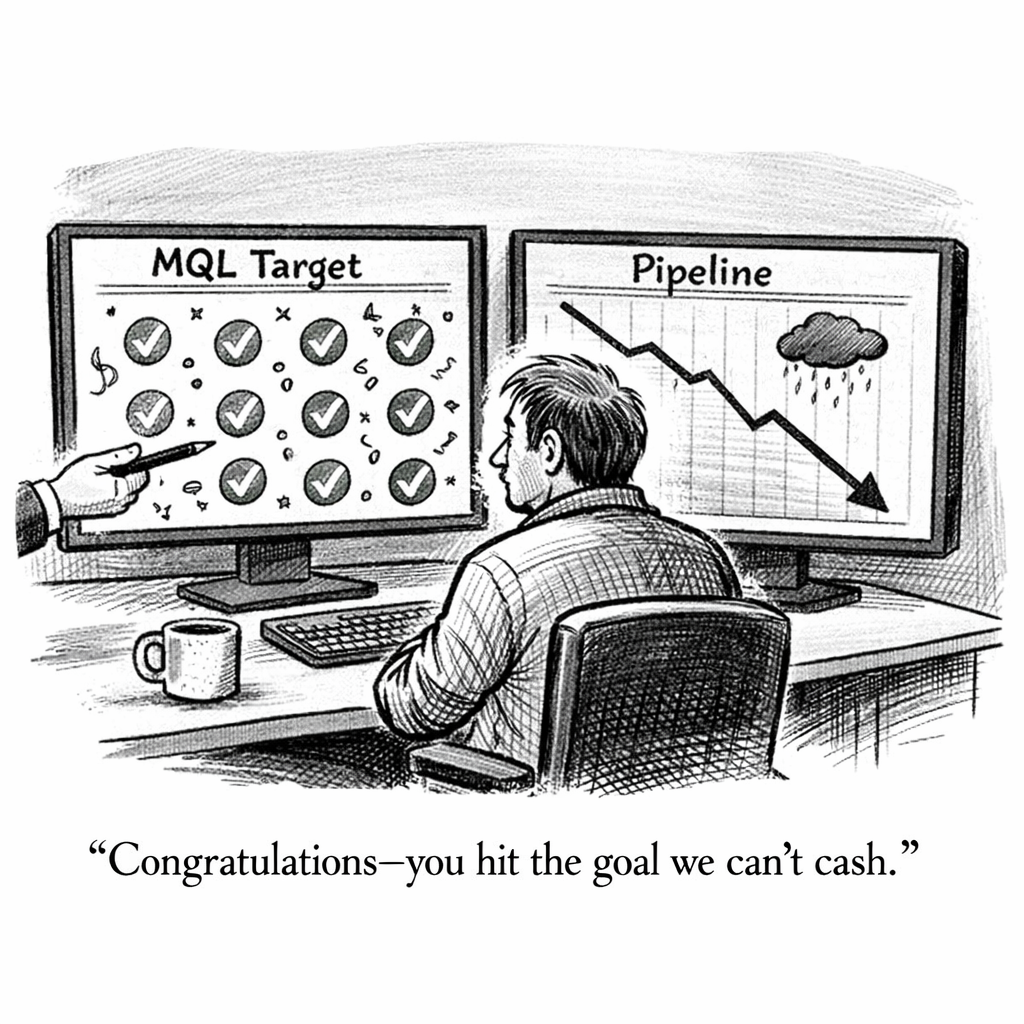
The difference between a metric you're judged on and a metric that actually matters is subtle but critical. You're judged on MQLs because it's easy to measure and easy to own. But the metric that actually matters is whether those leads turn into deals that close. That's not your job alone. But it is your responsibility to understand how your work connects to that outcome.
How to start tracking closed-won influence without waiting for the tech stack to catch up is straightforward. Pick your three biggest campaigns from last month. For each one, ask your sales leader: which of these leads turned into pipeline, and of that pipeline, what closed? Write down the percentage. Do that three months in a row. You'll start seeing patterns. Some campaigns have a 5 percent close rate. Some have a 25 percent close rate. The ones with higher close rates are where you should be investing more.
What to say in the next campaign debrief when the leads are good but the pipeline isn't: "We generated leads, but the pipeline didn't materialize. Let's look at what's different about these leads compared to the last campaign that did convert. Are they in different segments? Different job titles? Did they engage differently with the content?" You're asking diagnostic questions instead of defending the metric.
The simple habit Jason Seeba uses to connect campaign spend to closed revenue is asking one question after every campaign: what's the closed revenue influenced by this campaign? Not in three months. Now. Look at the leads that came in, find the ones that have moved into opportunities, calculate the total deal value. A single $2M closed deal influences how you think about campaign effectiveness way more than 500 leads ever will.
How to make the revenue conversation your idea before it becomes your problem is about timing. Don't wait for your VP to reorganize your targets around closed revenue. Start tracking it yourself now. Build a habit of looking at your campaigns through the lens of closed revenue, not lead volume. When your VP eventually says "we need to shift to revenue metrics," you'll already be two steps ahead.
Start with one campaign this week. Track it to close. Then do it again next month. In six months, you'll know more about what actually works than most VPs in the building.
Scott.