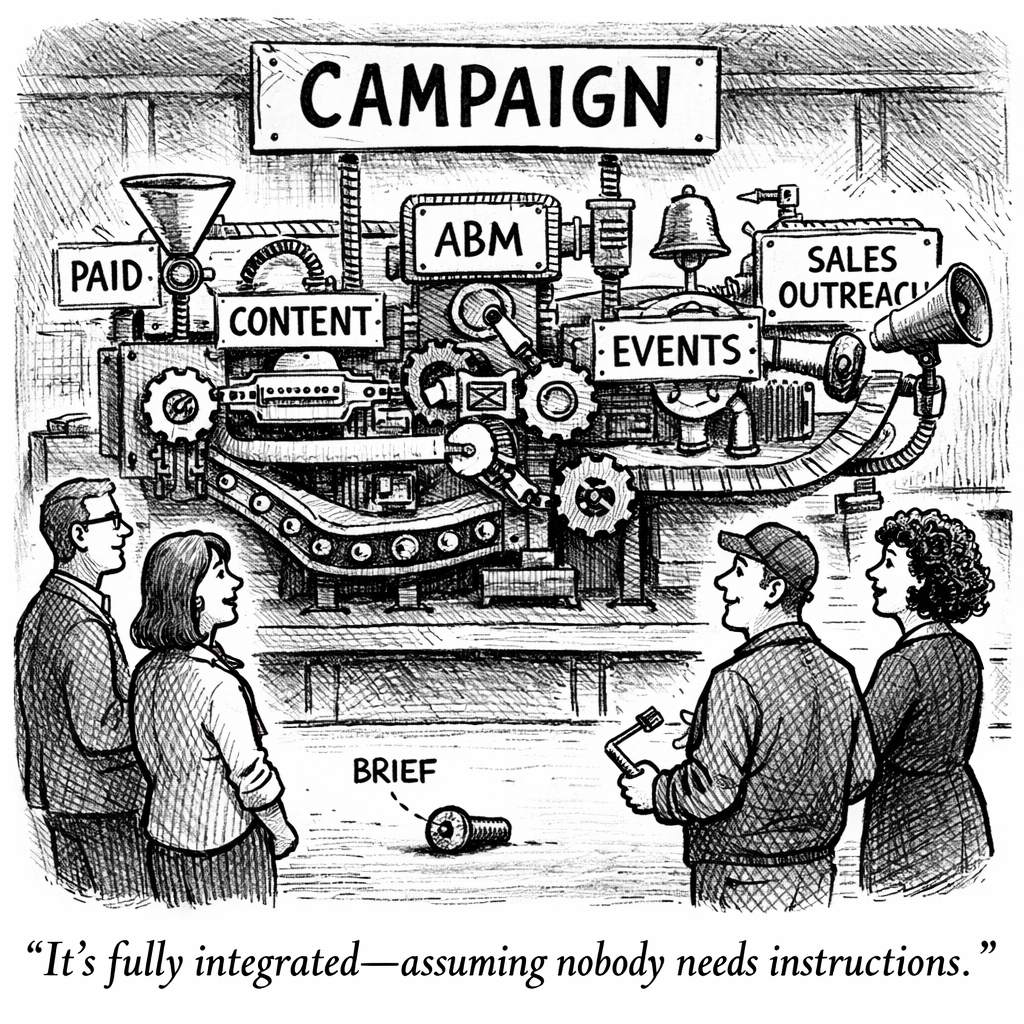
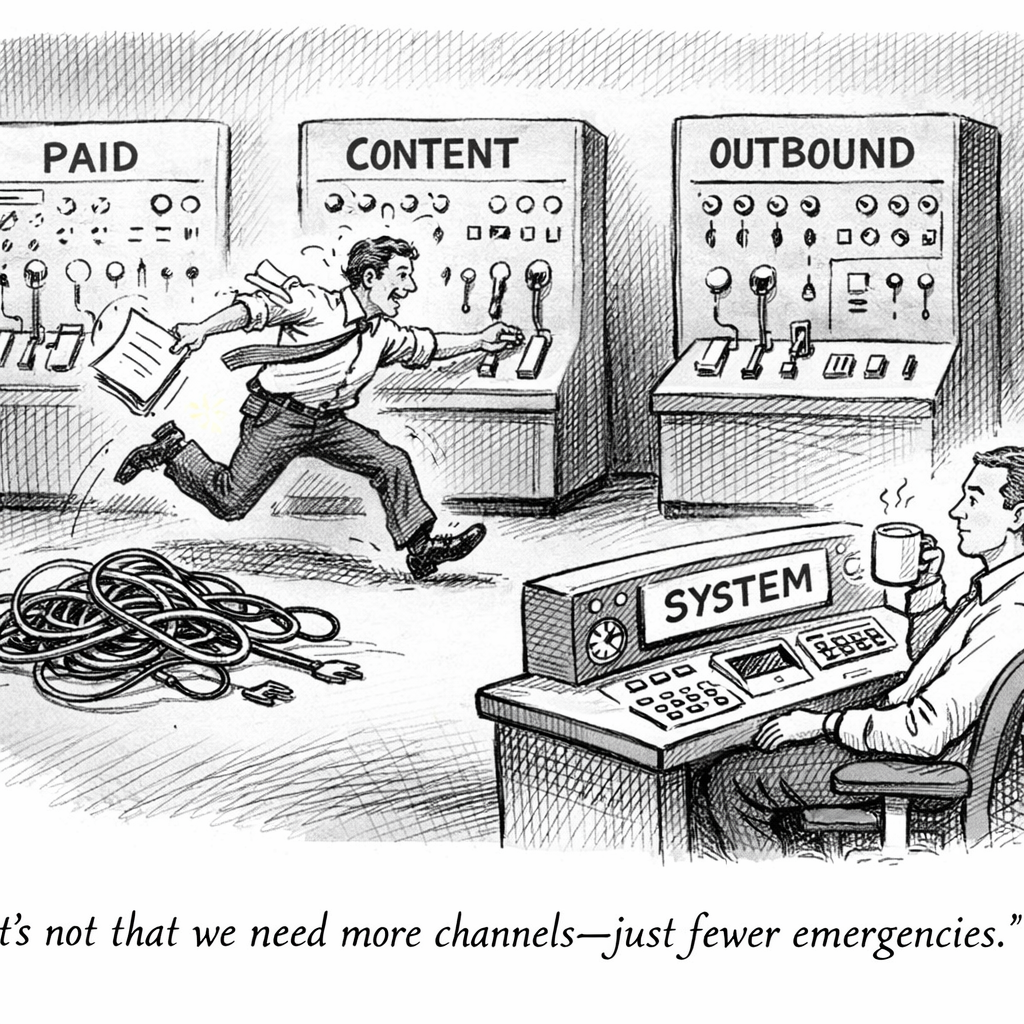
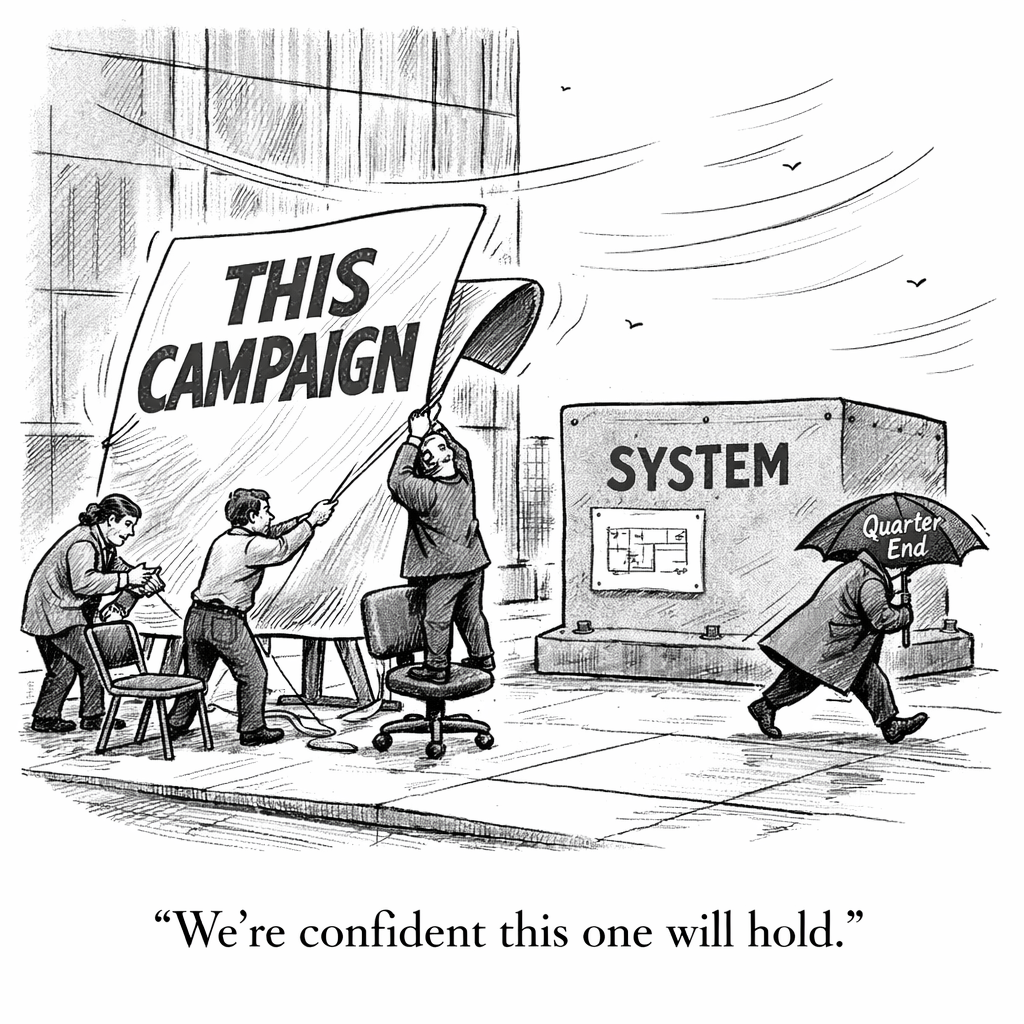

You're really good at paid. You understand creative performance. You know how to move budget toward what's working. You can read a conversion funnel and spot problems. And somewhere around week two of every campaign, you realize that paid is working in a vacuum. Creative is saying one thing. Sales is saying something else. Content from three weeks ago is contradicting the message you're running right now. The paid is converting fine. The system is broken.
The sign that you're managing tactics instead of driving a coordinated strategy is this: you're optimizing your channel without knowing how it's connecting to other channels. Paid is your job. But what's paid for? If it's converting to leads, do you know what happens to those leads? Do you know how many actually become conversations with sales? Do you know what message the prospect heard from content right before they saw your ad? If you can't answer those questions, you're managing paid. You're not driving strategy.
What it looks like when paid, content, and outbound are actually talking to each other is almost boring once it's working. A prospect sees a paid ad about a specific problem. They click. They land on a page that's optimized for that exact problem. They engage with that content. If they don't convert right away, content follows up with an email sequence that builds on what they just read. If they do convert to a lead, outbound calls them within 24 hours with context about what they just read, saw, and engaged with. The message is consistent. The timing is predictable. The handoffs work. It's not magic. It's orchestration.
Create a personal orchestration habit without waiting for your VP to mandate it. Start small. Before you launch paid, ask content what they're publishing in the next two weeks. Ask outbound what they're targeting. Spend 30 minutes thinking about how your paid audience overlaps with what content is pushing, or, even better, how paid can warm up the market for outbound. That's it. You don't need permission. You don't need a new platform. You just need to think beyond the channel you own.
The campaign kick-off meeting that prevents most mid-quarter breakdowns has one simple structure: everyone who touches this campaign is in the room. You walk through the message. You walk through who you're targeting. You walk through what's happening when. Paid asks content, "When does the email launch relative to when we're running the ad?" Content asks outbound, "What's your calling sequence so we know how to sequence emails?" These aren't complicated questions. But they don't get asked unless you force the conversation.
Divya Giritharan from Appen has a framework for this: who owns what? At the execution level, it's simple. Every piece has an owner. Every handoff between pieces also has an owner. Someone is accountable for making sure paid hands off cleanly to the landing page. Someone is accountable for making sure the lead gets called within 24 hours. Clarity beats ambiguity every time.
Think like a system. You'll become one.
Scott.